Imam Malik (Rahmatullahi Alaih) and the Greatness of the Prophet (ﷺ) .... !!

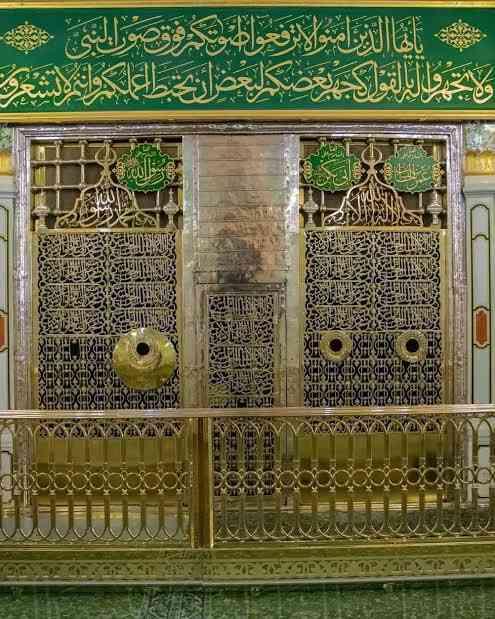
It is recorded in history that once the ruler of his time, Amir-ul-Mu'minin Abu Ja'far al-Mansur, argued about a certain matter with Hazrat Imam Malik (Rahmatullahi Alaih) in the Prophet's Mosque (Al-Masjid an-Nabawi), and his voice became loud. Thereupon, Imam Malik (Rahmatullahi Alaih) said, "O Amir-ul-Mu'minin! Do not raise your voice in this mosque. Allah taught this etiquette to a group of Companions (Sahaba): { لَا تَرْفَعُوْا أَصْوَاتَکُمْ فَوْقَ صَوْتِ النَّبِيِّ } Translation: (Do not raise your voices above the voice of the Prophet), and He praised another group in this manner: { اِنَّ الَّذِیْنَ یَغُضُّوْنَ أَصْوَاتَھُمْ عِنْدَ رَسُوْلِ اللّٰہِ } Translation: (Indeed, those who lower their voices before the Messenger of Allah)." And then he said, "His (ﷺ) reverence and greatness after his passing is exactly the same as it was during his lifetime."

(Tartib al-Madarik by Qadi Ayyad: 1/68, Khulasat al-Wafa by al-Samhudi: 1/51)

ارے بھائی!

اگر آپ ہزاروں کتابیں، نعتیں، تصاویر، ویڈیوز، اخبار، مضامین، قبلہ نما، اوقات نماز، اسلامک گھڑی اور بہت کچھ آسانی کے ساتھ حاصل کرنا چاہتے ہیں تو بس ہمارے Islamic Tube ایپ کو پلے سٹور سے انسٹال کرو، اور بالکل مفت اور آسانی کے ساتھ اسلامک مواد حاصل کرو

ڈاؤن لوڈ کریں
Image 1

Corrections and Amendments in Certain Places of Behishti Zewar and Taleem-ud-Deen

Corrections and Amendments in Certain Places of Behishti Zewar and Taleem-ud-Deen

Corrections in certain places of Behishti Zewar and Taleem-ud-Deen: (1) In Behishti Zewar, four Sunnahs have been written after the Isha prayer; the correct ruling is that there are two Sunnahs and two Nafl. (2) In Behishti Zewar, the dates for Ayyam-e-Beed (the white days of lunar fasting) have been written as the 12th, 13th, and 14th; the correct dates are the 13th, 14th, and 15th. (3) In Taleem-ud-Deen and Behishti Zewar, while mentioning Teeja (3rd-day ritual), Chaliswan (40th-day ritual), etc., as innovations (Bid'ah), the phrase "doing it considering it necessary" was used. This could create a doubt that perhaps doing it without considering it necessary is permissible. This qualification was descriptive (waqi'ee), not restrictive (ihtirazi). The ruling is that no matter how it is performed, it is a Bid'ah (innovation). (4) In Taleem-ud-Deen, regarding lighting lamps over graves, the phrase "lighting lamps in abundance" was written. This should also be understood in the same manner as the third point; the ruling is that keeping even a single lamp is a Bid'ah. Friends are requested to pray that Almighty Allah forgives my unintentional and intentional errors, and does not let my speeches and writings become a cause of misguidance. _____________________________________ (Ashraf-us-Sawanih: 3/135, Bawadir-un-Nawadir: 428)