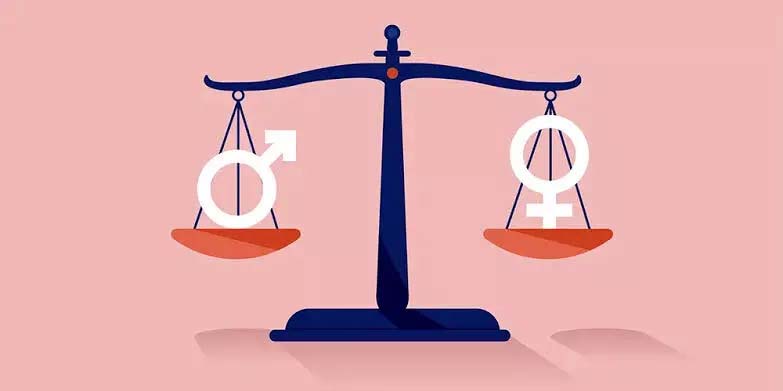
India's ranking drops According to the World Economic Forum (WEF) Global Gender Gap Report 2025, India has slipped two places to 131st out of 148 countries. With a score of 64.1 percent, India is among the lowest-ranked countries in South Asia. However, the report highlighted the improvement in women's education and economic inclusion, while political empowerment has declined. Economic and educational development India achieved a score of 40.7 percent with a 0.9 percent increase in economic inclusion. Women's participation in the labor force remained at 45.9 percent, which is India's highest score ever. In education, female literacy and participation in higher education increased with a score of 97.1 percent. India also showed high equality in health and survival, which reflects improvements in sex ratio and healthy life expectancy. Decline in political empowerment India's score in the political arena fell by 0.6 percent. Women's representation in parliament fell from 14.7 to 13.8 percent, while women's share in ministerial positions fell from 6.5 to 5.6 percent. This is a significant decline from 30 percent in 2019. South Asia and the Global Landscape Bangladesh ranks 75th India jumped to 24th place and is the top country in South Asia. Nepal (125), Sri Lanka (130), Bhutan (119), Maldives (138), and Pakistan (148) are behind. Globally, Iceland has topped the gender equality index for the 16th consecutive year, followed by Finland, Norway, the United Kingdom, and New Zealand. According to the Global Facts and Challenges report, the global gender gap has narrowed to 68.8 percent, the largest annual increase since the pandemic. But it will take 123 years for full equality. WEF's Sadia Zahidi said that gender equality is not only a moral but also a means of economic development. The result is promising improvements in India's education and economy, but women are underrepresented in the political arena. More concrete steps are needed for gender equality so that India can move up the global rankings. (Report)