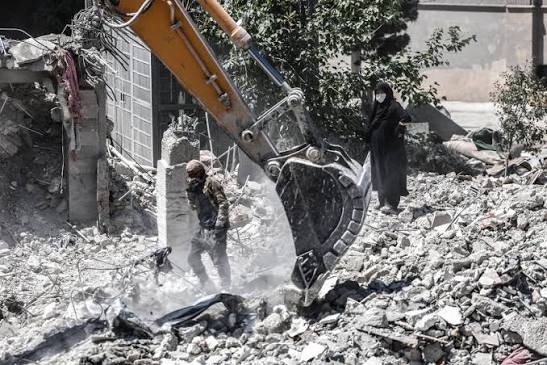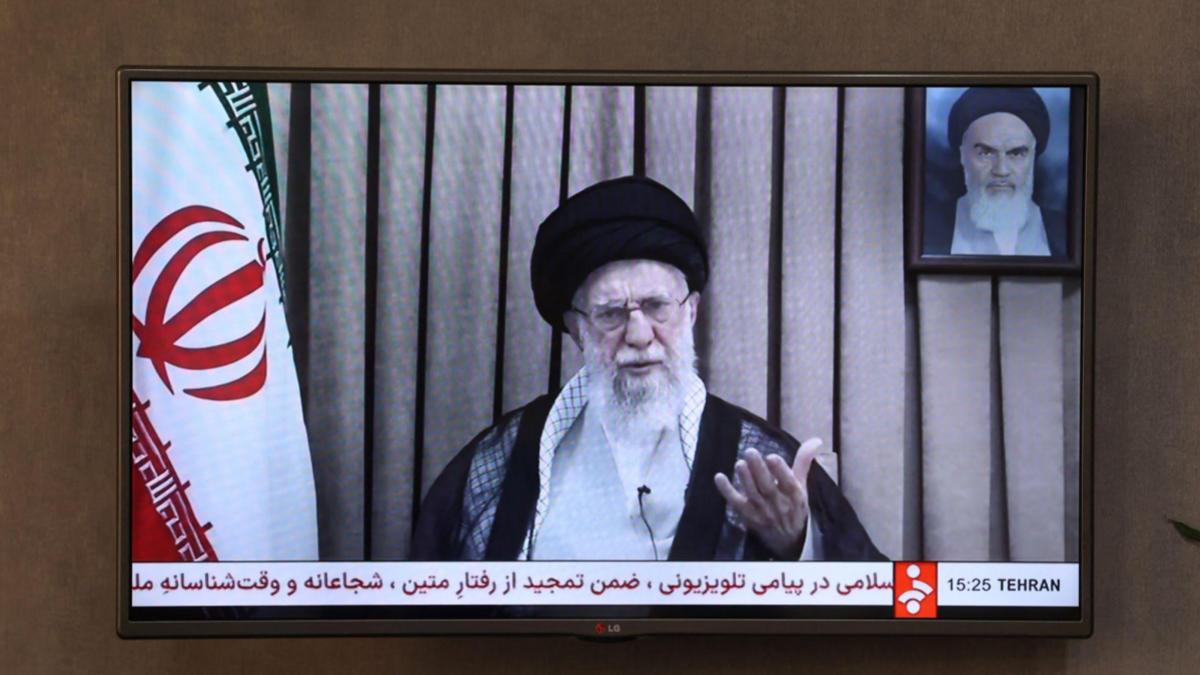
Statement details: Ayatollah Ali Khamenei, 86, spoke in a recorded video message on Iranian state television, his first public appearance since June 19. He sounded somewhat tired this time, his voice was heavy and he occasionally faltered in his words. In the more than 10-minute address, he issued stern warnings against the United States and Israel and praised the Iranian nation’s resilience. He downplayed the US strikes on Sunday, which used bunker-buster bombs and cruise missiles on three of Iran’s nuclear facilities (Fordo, Natanz and Isfahan), saying that US President Donald Trump had exaggerated the impact of the strikes. He said Trump’s claim that Iran’s nuclear program had been completely destroyed was a gross exaggeration. “The US failed to achieve its goals,” he said. "They have not achieved any significant success." However, Rafael Grossi, director general of the UN nuclear watchdog, the International Atomic Energy Agency (IAEA), told French broadcaster RFI on Thursday. He said that the Israeli and American attacks had caused “very, very, very great damage” to Iran’s nuclear facilities. He said that although it would be an exaggeration to say “destroyed,” the extent of the damage was extraordinary. Iranian Foreign Ministry spokesman Esmail Baghai also acknowledged on Wednesday that “our nuclear facilities have been severely damaged, that is certain.” Background to the war and ceasefire: The war began on June 13 after Israel attacked Iran’s nuclear facilities and top military commanders and scientists. After that, Ayatollah Khamenei moved to a secret location and disappeared from public view. On Sunday, June 22, the United States attacked three Iranian nuclear facilities, after which President Trump’s efforts led to the declaration of a ceasefire on Tuesday. Khamenei claimed that the US only joined the war because it feared that if it did not intervene, “the Zionist regime would be completely destroyed.” He said: “The US tried to save the Zionist regime, but it did not achieve anything.” Attack on US base in Qatar: Khamenei He called the Iranian attack on the US base in Qatar, Al-Udeid Air Base, on Monday a “major achievement.” He said the attack was proof that Iran has access to key US targets in the region and can strike them if necessary. He called it a “slap in the face” for America and said the attack could be repeated in the future. He added: “The Islamic Republic of Iran was victorious and has retaliated with a big slap in the face for America. If the enemy attacks again, it will pay a heavy price.” The attack did not cause any casualties, as Iran had informed Qatari authorities and the US military hours before the attack. President Trump called it a “positive sign,” saying that this information prevented any casualties. Recovery in Iran: Life in Iran is slowly returning to normal after a ceasefire. On Thursday, Iran reopened the eastern half of its airspace to domestic and international flights. Shops began to open on the streets of Tehran and traffic The airspace in the eastern part of the country has been reopened, said Majid Akhavan, a spokesman for the Ministry of Roads and Urban Development. War casualties: According to Iranian officials, 606 people were killed and 5,332 were injured in Iran during the war. However, the Washington-based human rights group Human Rights Activists released figures on Wednesday showing at least 1,054 people killed and 4,476 injured in Israeli attacks, including 417 civilians and 318 security personnel. On the other hand, Iranian attacks in Israel killed 28 people and injured more than 1,000. Future talks and nuclear program: President Trump claimed that US and Iranian officials will hold talks next week, which is a ray of hope for long-term peace. However, Iran has not yet confirmed the talks. US Middle East envoy Steve Watkoff said that there have been direct and indirect contacts between the two countries. Iran has categorically refused to abandon its nuclear program. On Wednesday, the Iranian parliament approved a proposal to fast-track it, which would Iran’s cooperation with the IAEA, which has been monitoring its nuclear program for years, could effectively end. Conclusion: Ayatollah Khamenei’s statement reflects the determination and steadfastness of the Iranian nation, but it also makes it clear that Iran is not willing to compromise on its nuclear program. Despite the ceasefire, tensions remain in the region, and the success of future talks depends on whether the parties can address each other’s concerns. This statement not only clarifies Iran’s position but also sends a message to the international community that Iran will not compromise its sovereignty and dignity. Source: AP News: The Hindu: Washington Post: X-Posts: