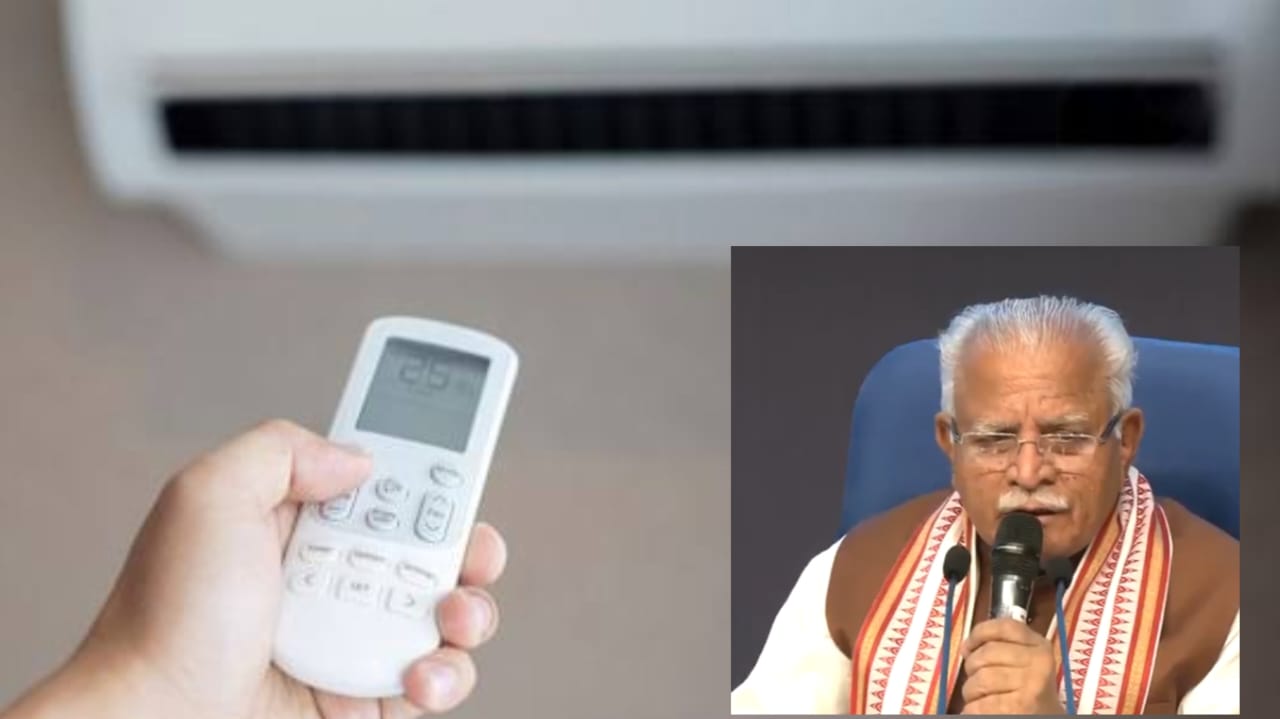
Why does the government want to control the temperature of air conditioners (ACs)? In view of the intense heat and increasing electricity consumption in India, Union Power Minister Manohar Lal Khattar has announced the implementation of new rules to control the temperature of ACs soon. This decision has sparked a debate on social media. Let's know the answers to 5 important questions about this new system. 1. To whom will this law apply? The AC temperature control law will apply to all ACs installed in homes, offices, shops, showrooms and vehicles. After the new rules, the manufacture of ACs will also be in accordance with the same temperature range (16-28 degrees). 2. What will be the biggest benefit? This will reduce electricity consumption, save electricity, and reduce bills. The pressure on the power grid will be reduced and power cuts will be reduced, which will benefit both the government and the public. 3. What is the reaction of experts and the public? Experts are divided on this decision. Some consider it the best measure to save electricity, while others say that less cooling will not provide relief from the heat. AC manufacturers are supporting this law, but architects are against it, because cooling is necessary in closed houses. 4. Are there such laws in other countries? Yes, Italy, Japan, and South Korea have AC temperature control laws. Italy and Spain have a limit of 23 degrees, while Japan has a limit of 27 degrees. However, critics say that India's heat cannot be compared to these countries. 5. Who is in favor of it and who is against it? The Council on Energy, Environment and Water (CEEW) supports it, which says that electricity consumption can be reduced by up to 12%. On the other hand, architects consider it impractical, because in the rising heat, AC is no longer a luxury, but a necessity. Conclusion: This government decision may be an important step towards energy conservation and environmental protection, but its success depends on public acceptance and practical implementation.