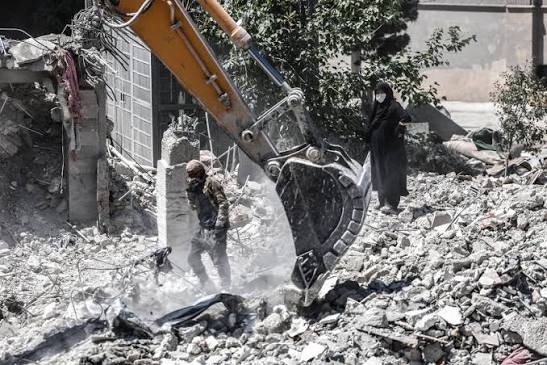
Details of the attack: According to the Israeli military, more than 50 fighter jets attacked multiple targets in and around Tehran on Wednesday morning. The Israeli air force targeted a centrifuge production facility, which plays a key role in enriching uranium, in an attempt to undermine Iran’s nuclear weapons program. In addition, factories producing raw materials and components for the production of surface-to-surface missiles were also destroyed. The Israeli military claimed that the strikes killed senior Iranian commander Ali Shadmani and his predecessor, Gholam Ali Rashid. An Israeli military spokesman said: “Our airstrike is a full-scale attempt to eliminate Iran’s nuclear and military capabilities. We are conducting independent operations in the skies over Tehran.” Iran’s counterattack: Iran’s Islamic Revolutionary Guard Corps (IRGC) launched a hypersonic Fateh-1 missile attack on Tel Aviv on Wednesday night under “Operation True Promise 3.” The IRGC claimed that its missiles were able to evade Israeli defense systems and hit Tel Aviv's shelters. The Fateh-1 missile, which is five times They travel at supersonic speeds and are known for their planning and precision targeting capabilities. Iran also sent a swarm of drones towards Israel, two of which were intercepted in the Dead Sea region. According to the Iranian Ministry of Health, 585 people have been killed and 1,326 injured in the Israeli attacks so far, including several high-ranking military commanders. On the other hand, Israeli officials said that 24 civilians were killed in the Iranian attacks, including damage to residential areas in Tel Aviv and Haifa. Global response and evacuation: The bloody conflict has alarmed the international community. The UN nuclear watchdog (IAEA) has launched an investigation into the attacks on the Natanz facilities, but there has been no confirmation of a radiation leak. US President Donald Trump has demanded unconditional surrender from Iran, but has also made it clear that the US is not directly involved in the attack. However, the US military helped Israel intercept the Iranian missiles. More than 700 foreign citizens were evacuated from Iran to Azerbaijan and Armenia, including those from Russia, Germany, China, and citizens of other countries. In Tehran, fuel and essential goods shortages have caused panic among citizens, while a cyberattack has paralyzed Iran’s state-run Bank Sepah. In Tel Aviv, citizens are also moving to underground shelters, where fear looms. Damage and impact: The Israeli strikes have severely damaged Iran’s nuclear facilities, oil refineries, and military bases. The Natanz enrichment facility was completely destroyed, while partial damage was reported at the Isfahan and Fordow facilities. Iran’s ballistic missile capabilities were also hit, but Iranian officials claimed that their counterattacks had shaken Israel. The result: This is the most intense and direct confrontation between Israel and Iran to date, bringing the region to the brink of a major war. The Israeli strikes have weakened Iran’s military and nuclear capabilities, but Iran’s hypersonic missiles have also exposed the limitations of Israel’s defenses. De-escalation efforts by world powers appear to be failing, and this conflict is a Could be a precursor to a wider regional war. Source: Al Arabiya English: Dhaka Tribune: Reuters: Al Jazeera: BBC News: X-Posts: