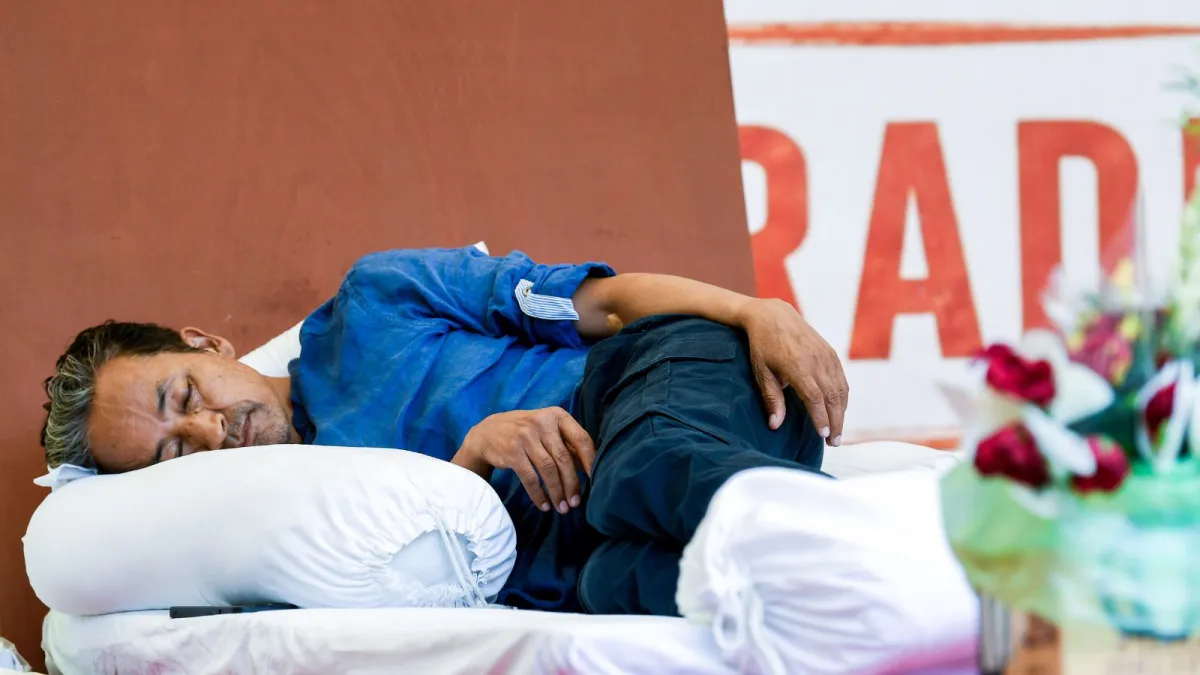
The unique world of the space station: The International Space Station (ISS) is the result of an international collaboration, built by the United States, Canada, Russia, Japan, and Europe. The space station orbits the Earth at a speed of 28,000 kilometers per hour, completing one complete orbit every 90 minutes. Due to this speed, astronauts experience day and night every 45 minutes, meaning 16 sunrises and sunsets a day. This is completely different from the usual 24-hour day on Earth. In such a strange environment, astronauts follow a schedule according to Coordinated Universal Time (UTC) to keep their lives organized. Their day begins at 6 a.m., which is based on a systematic balance of work, exercise, and rest. Sleep management: The concept of a traditional bed disappears in the zero gravity environment on the space station. Astronauts use special sleeping bags, which are hung from the walls, to catch their sleep. These bags keep them stable in floating conditions. Shades are installed on the station windows to block out light while sleeping, as sunlight shines through every 45 minutes. Can disrupt sleep. Each astronaut is allotted 8 hours of sleep, which is determined by UTC. Before sleep, they are strapped into their sleeping bags so that they do not float inside the station. One astronaut described his experience: “Sleeping in zero gravity is a strange experience. You are locked in a bag and hanging from a wall, but after a few days it becomes normal.” Work and exercise schedule: Astronauts work 8 to 10 hours a day, which includes scientific experiments, station maintenance, and exercise. Each day’s schedule is created in coordination with the ground control team. To prevent muscle and bone weakness due to zero gravity, each astronaut exercises for 2 hours a day, which includes treadmill, bicycle, and resistance exercises. The rest of the time is spent on meetings, communication with ground control, and data recording. The astronauts’ schedule is structured in such a way that they can maintain a balance between work and rest. Food and entertainment: Food on the space station is freeze-dried and vacuum-packed, including rice, fruits, pulses, and Other foods are included. A small oven is available to heat food. Water is recycled, which is an important part of the station's self-sufficiency. Although the view of the sunrise and sunset 16 times is fascinating, it can also be tiring for the astronauts. To avoid stress, they read books, listen to music, and take pictures of beautiful landscapes of Earth. They also make video calls to their families through ground control, which helps reduce their mental stress. Describing his experience, an astronaut said: "400 km above the Earth, when you look at the blue planet, you realize how big a part of the universe we are. This view makes every moment meaningful." Shubhanshu Shukla's historic journey: Indian Air Force Wing Commander Shubhanshu Shukla made India's name by reaching the ISS on June 27, 2025. He is the second Indian astronaut after Rakesh Sharma to travel to space. He was warmly welcomed by the current ISS crew upon his arrival. Shukla trained under ISRO's August 2024 mission and is now aboard the space station. They are becoming part of scientific experiments on. Source: NASA Official Website: ISRO Official Website: The Hindu: India Today: X Posts: