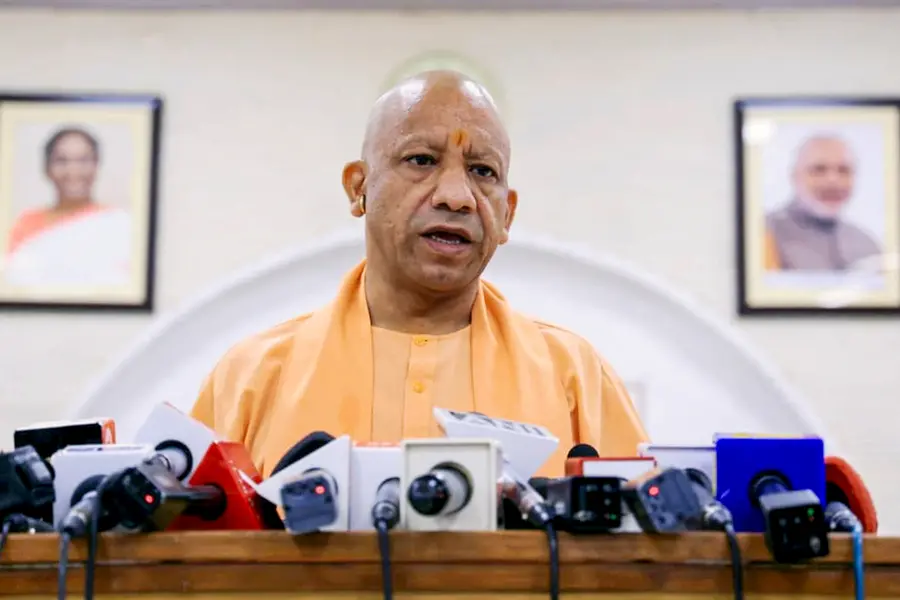
The Uttar Pradesh government has issued a comprehensive new order governing character and background verifications prior to appointments in government service. Issued on October 28 by Principal Secretary M. Devaraj, the 21-page order has drawn sharp criticism from opposition parties and student organizations over a specific provision. In response, the government released a clarification on October 29, terming media interpretations of the order as misleading.
What is the Controversial Provision?
According to Paragraph 4 of the order, an applicant may be deemed ineligible for government employment if they are associated with an organization whose declared objective is to alter the existing social order through violent means:
The candidate must be at least 21 years of age.
The rule applies only if there has been active participation in such activities within the three years preceding the verification date.
The presumption of ineligibility can be challenged if concrete and positive evidence demonstrates a genuine change in conduct and behavior.
The Government's Clarification
No individual will be disqualified based on their political ideology.
General political opinions, constructive criticism of the government, and peaceful democratic activities fall entirely outside the scope of this order.
This provision existed in earlier government orders; the new document merely consolidates past directives (spanning from 1958 to 2021) into a single, unified policy in compliance with directives from the Allahabad High Court.
The appointing authority will forward the candidate's details to the DGP and the District Magistrate (DM) of their home district. If the candidate resided in another district for over a year during the past five years, details will also be sent to that district's DM. Reports will be compiled using police and Local Intelligence Unit (LIU) records.
The rules take effect from the date of issuance and will apply to all pending verification cases.
Voices in Support
Welcoming the decision, BJP Rajya Sabha MP Ram Pratap Singh stated that changes in governance occur through democratic elections, not through hooliganism or lawlessness.
Opposition and Student Body Resistance
Akhilesh Yadav: Taking a swipe at the administration, the Samajwadi Party chief remarked, "Those making such laws will soon find themselves unemployed."
Udayveer (SP Spokesperson): Compared the rule to colonial-era British laws, questioning how demanding a change in governance could be equated with altering the system through violence.
Aradhana Mona Mishra (Congress): Termed the directive "unconstitutional" and insisted that students participating in peaceful protests must not be targeted under these provisions.
Dinkar Kapoor (AIPF-Radical): Questioned who gets to define the line between peaceful and violent protests, alleging that activists could be framed under severe charges to deny them employment.
Anjali (Student Activist, 'Disha'): Citing past labor demonstrations in Noida, she expressed concern that peaceful movements could be mislabeled as violent to deliberately penalize dissenters.
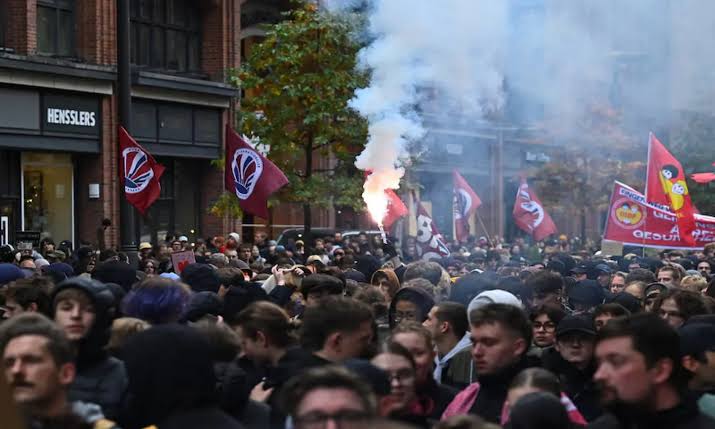
Critics argue that amid widespread youth demonstrations across the country in recent months, this order aims to instill fear among young job seekers.
Balanced Stance by ABVP
Representatives from the Akhil Bharatiya Vidyarthi Parishad (ABVP) Lucknow University unit, Shakti Singh and Ashutosh Srivastava, noted that while character verification is necessary, the process must remain fair and transparent. They emphasized that a clear distinction must be drawn between ideology, peaceful protest, and violent activity, ensuring candidates are given a full opportunity to present their case in the event of an adverse report without "treating dissent and crime with the same yardstick."