Delhi-NCR Winter Action Plan Implemented: 50% Work From Home & Ban on Older Vehicles; Long Jams at Borders, Though October Air Breaks 9-Year Record
Location: New Delhi / Gurugram
Special Update: Strict restrictions effective November 1 to February 28; Public parking fees doubled.
Strict restrictions have come into effect starting November 1 to curb the annual surge in winter air pollution across Delhi-NCR. Under the new rules, vehicles registered outside Delhi that do not meet BS-VI emission standards are completely barred from entering the capital. Additionally, government and private offices have been mandated to implement a 50% 'Work From Home' policy for employees. Amid these stringent measures, however, the capital has received a major boost of relief with October registering its cleanest air quality in nine years.
Key Restrictions and Border Status at a Glance
Ban on Out-of-State Vehicles: Entry of non-BS-VI vehicles registered outside Delhi is prohibited.
New Office Arrangements: Offices can operate with only 50% staff physically present, while the remaining 50% work remotely.
Higher Parking Rates: Parking fees at several public lots have been doubled to discourage private vehicle usage.
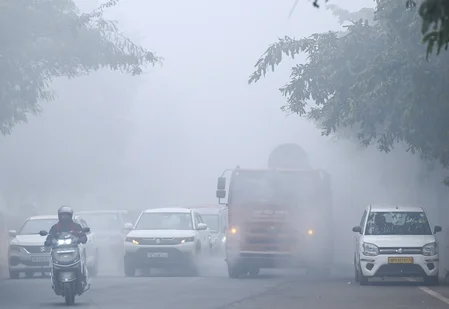
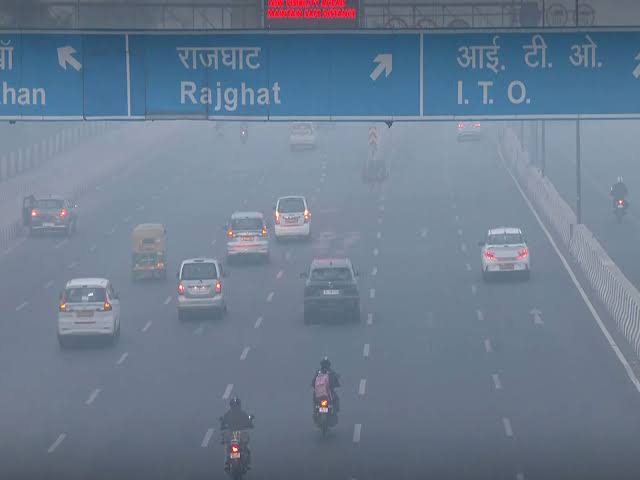
Delhi-Gurugram Border Congestion: Due to rigorous checks and new restrictions, a traffic jam stretching around 1 kilometer formed on the main carriageway and service lanes of the Delhi-Gurugram Sirhol Border (NH-48) on Sunday morning.
Shift in Strategy: Enforcing Rules by Date Rather Than Waiting for Toxic Spikes
The Delhi government approved a permanent 'Winter Action Plan' back in July 2026. Under this framework, anti-pollution guidelines automatically trigger every year from November 1 through February 28.
Previously, restrictions were rolled out in a phased manner via the Graded Response Action Plan (GRAP) only after air quality deteriorated. Under the revised strategy, the government no longer waits for AQI levels to hit hazardous marks, choosing instead to enforce preventive protocols from a predetermined date.
What is the GRAP Framework?
Introduced in January 2017, the Graded Response Action Plan (GRAP) is designed to implement emergency curbs in four distinct stages depending on the severity of air quality levels (AQI) in Delhi-NCR.
Relief Statistics: Clearest October in 9 Years, Delhi's Air Quality Improves in 2026
Amid the stringent regulations, data released by the Environment Ministry has brought welcome relief. Delhi's average AQI for October stood at just 166, marking the cleanest October air quality recorded in the last nine years. Furthermore, a significant improvement has been observed in the number of clean-air days between January and October:
Year (Jan to Oct) Clean / Satisfactory Air Days (AQI Below 200) Poor / Severe Air Days (AQI Above 200)
2026 220 days 84 days
2025 200 days 104 days
2024 201 days 104 days
2023 206 days 98 days
2022 Data not available 144 days
Ministry figures confirm that during the first ten months of 2026, Delhi residents enjoyed the highest number of clean air days (220) compared to the preceding four years, while polluted days dropped to just 84.