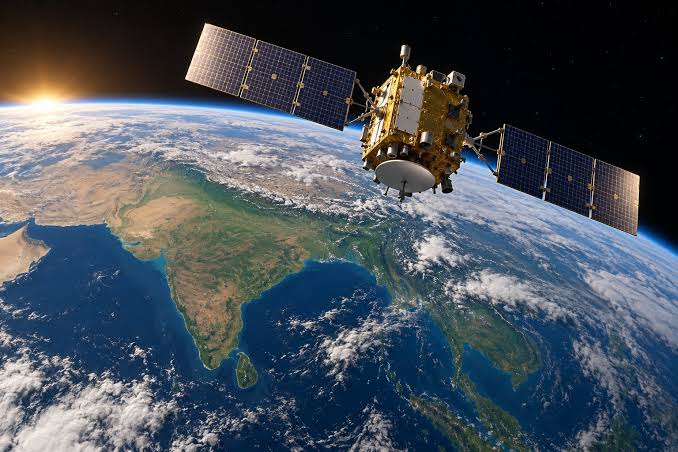
India's indigenous navigation system, 'Navigation with Indian Constellation' (NavIC), has moved a step closer to restoring its full operational capacity. ISRO has successfully placed the NVS-03 satellite into its designated Geosynchronous Orbit. The third and final orbit-raising maneuver has been successfully completed, marking a critical milestone for India's independent satellite navigation network.
Launch and Orbital Ascent
NVS-03 was launched on October 30, 2026, aboard the GSLV-F18 rocket from the Satish Dhawan Space Centre in Sriharikota.
Following the launch, the satellite was initially placed into a Transfer Orbit before executing a three-phase orbit-raising process to reach its final orbital slot.
What is NavIC and What Will NVS-03 Do?
NavIC serves as the Indian alternative to global navigation systems like the US-owned GPS. It provides positioning, navigation, and precise timing services covering all of India and extending up to 1,500 km beyond its borders.
It powers key applications including smartphone navigation, vehicle tracking, railway operations, maritime transport, and emergency management services.
NVS-03 carries an indigenously developed atomic clock and supports the L1 frequency band, which allows seamless compatibility with everyday smartphones and standard navigation receivers.
Previous technical issues with atomic clocks on earlier satellites had impacted NavIC's performance. Additionally, the previously launched NVS-02 failed to reach its intended orbit due to a propulsion system anomaly.
NVS-03 is expected to significantly fortify the network and help fulfill the minimum active satellite count required for independent positioning services.
Why is This Important for India?
A fully operational NavIC system enhances India's strategic self-reliance by reducing dependence on foreign satellite networks for critical navigation and timing data. This is particularly vital for national defense, disaster management, transportation, maritime safety, and critical national infrastructure.
What Lies Ahead?
Designed for an operational lifespan of approximately 12 years, NVS-03 will undergo rigorous technical evaluation, calibration, and commissioning procedures before formally integrating into the active network.
Note: Operational services have not been activated yet. The satellite will begin delivering full network services post-commissioning.