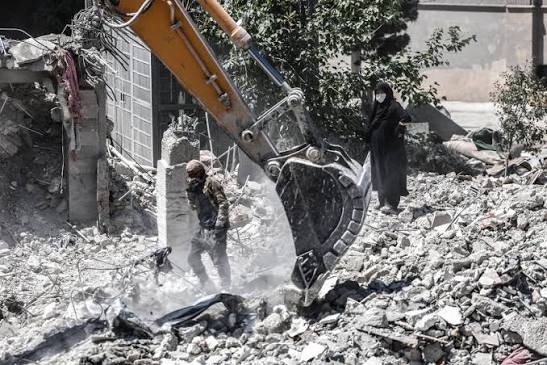
Conflict Description: The recent war between Iran and Israel, which lasted from June 13 to 24, 2025, brought global politics to a critical juncture. Israeli Defense Minister Israel Katz said in an interview with Israel’s Channel 13 that their attacks were aimed at destroying the infrastructure of Iran’s nuclear facilities—Fordo, Natanz, and Isfahan—and not at eliminating enriched uranium. He clarified: “We knew from the beginning that our attack would destroy the infrastructure around the nuclear facilities, but it would not eliminate the uranium. Now we and the United States are jointly demanding that Iran hand over its enriched uranium to us.” He claimed that Iran’s nuclear capability has been severely damaged, and “Iran has no way to make an atomic bomb today, because we have also destroyed the transfer facility that solidifies uranium.” However, he also made a shocking revelation that Israel does not know the locations of all of Iran’s enriched uranium reserves. The mystery of the missing uranium: The Financial Times, citing two confidential sources European countries believe that despite the US strikes, Iran still has about 408 kilograms of weapons-grade enriched uranium, which was not present at Fordow last week. Suspicious truck movements near Fordow were seen before the US B-2 bombers struck, leading intelligence agencies to suspect that Iran had moved its uranium to a secret location. Saudi-owned Al-Hadath channel quoted an unnamed Israeli source as saying that Israel knew “exactly” where Iran had hidden its enriched uranium. “Most of the enriched uranium is buried under rubble in Iran, but we will not attack it to avoid a nuclear catastrophe,” the source said. The source added that Iran’s nuclear capabilities, infrastructure, facilities, and centrifuges have been destroyed. US President's response: US President Donald Trump strongly denied claims that Iran had moved 408 kilograms of its enriched uranium to a secure location before the attacks. He said: "This is just speculation. The satellite "There is no concrete evidence from the images and intelligence analysis that Iran has transferred its uranium." US Defense Secretary Pat Hegseth also said that he had not received any intelligence that would prove that Iran has transferred its uranium. Plan to attack Khamenei: Israeli Defense Minister Israel Katz made another surprising revelation that during the war, Israel had tried to target Iran's Supreme Leader Ayatollah Ali Khamenei, but that opportunity did not come. He said: "We had decided to eliminate Khamenei, but he hid in a deep bunker and cut off contact with his commanders. We could not find him." When asked if permission was sought from the United States for this operation, Katz said bluntly: "We do not need anyone's permission in such matters." He added that Israel would neither allow Iran to build an atomic bomb nor long-range missiles. Global reaction and tensions: The conflict intensified when Iran announced its nuclear The Iranian parliament recently approved a proposal that could end Iran's cooperation with the International Atomic Energy Agency (IAEA). On the other hand, European countries believe that Iran's enriched uranium stockpile is still largely secure, which is a major threat to world peace. Conclusion: The mystery of the 400 kilograms of enriched uranium missing from Fordow is becoming the prelude to a new storm in world politics. Israeli and American pressure on Iran, a failed attempt to target Khamenei, and the search for uranium reserves have further complicated the dispute. This situation is a test not only for the Middle East but for the entire world, where there is the threat of nuclear weapons on one side and the hope of peace on the other. Will Iran hand over its uranium, or will this dispute lead to a new war? This question is in the hands of time. Source: Financial Times: Israel Channel 13 Al-Hadath Channel X Posts: